If you are shopping for a home in Metro Detroit, you have probably come across listings for both condos and townhouses. They might look similar on the surface, but there are real differences in what you own, what you pay, and how you live day to day. Understanding the distinction between a condo vs townhouse can save you thousands of dollars and help you avoid a purchase that does not fit your lifestyle. I recently helped a family who had just relocated to Farmington Hills. They assumed condos and townhouses were the same thing, and almost put an offer on a property that would have been completely wrong for their situation. That experience is more common than you would think, which is why I put together this guide. Below, I break down everything you need to know, including ownership structure, costs, HOA fees, privacy, and who each option is best for, all from my perspective as a Licensed Realtor working in Southeast Michigan.
What Is a Condo?
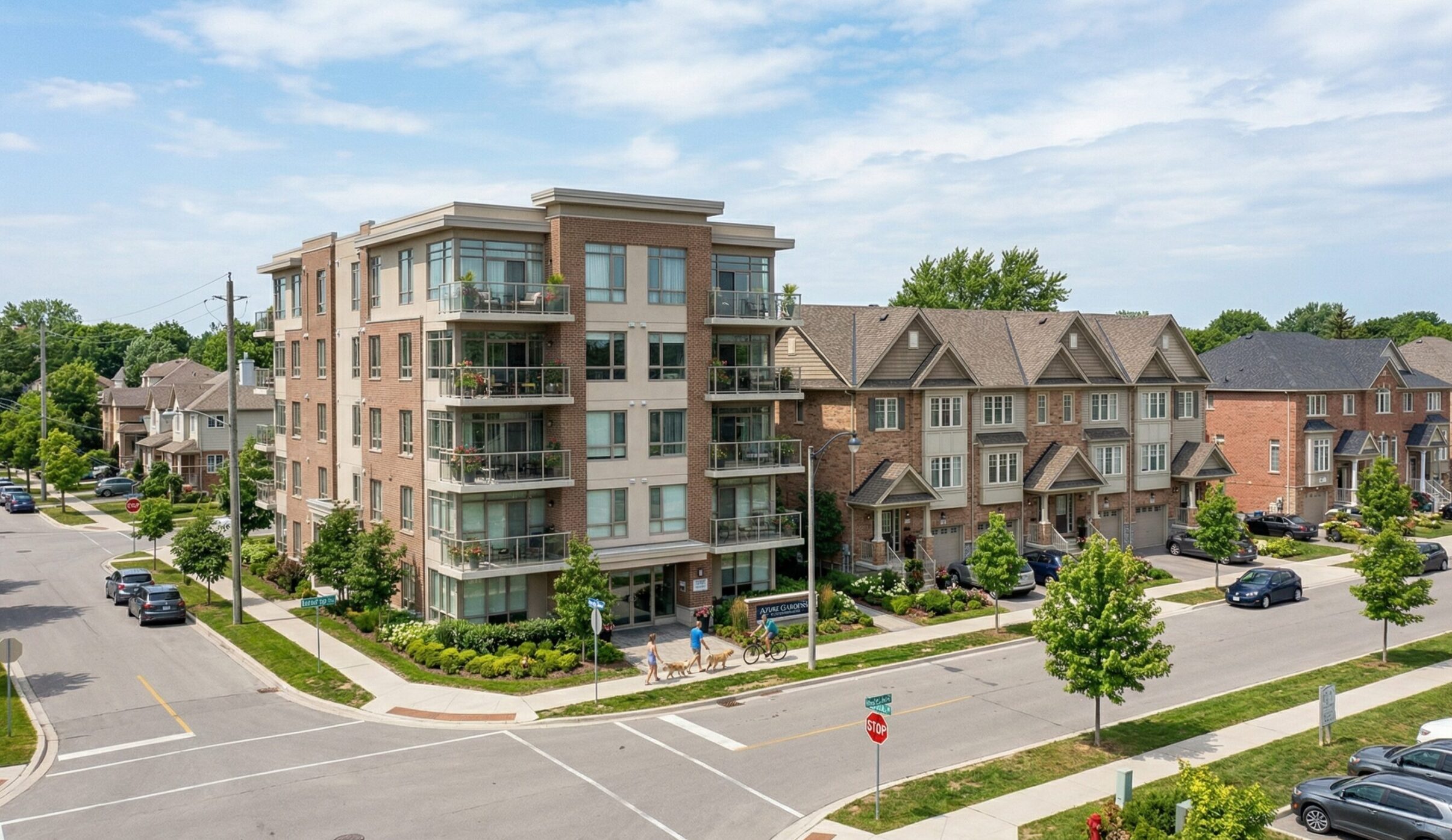
A condominium, or condo, is an individually owned unit inside a larger building or complex. When you buy a condo, you own the interior of your unit and nothing else. The building’s exterior walls, roof, hallways, parking structures, and common amenities are all owned and maintained by a Homeowners Association, also known as an HOA. Condos come in many shapes. They can be units in a high-rise building in downtown Detroit, garden-style units in a suburban complex in Novi, or even attached units that look like townhouses from the outside. The key factor that makes something a condo is the ownership structure, not the physical appearance. Condo owners pay monthly HOA fees that cover exterior maintenance, landscaping, snow removal, building insurance, and shared amenities like pools, fitness centers, and clubhouses. These fees vary widely. In Metro Detroit, you might see condo HOA fees ranging from around $150 per month for a basic complex to $400 or more for communities with extensive amenities. Every building and complex is different, so it is important to review the HOA budget before making an offer.
What Is a Townhouse?
A townhouse is a multi-level home that shares one or two walls with neighboring units, but is otherwise structured like a single-family house. When you buy a townhouse, you typically own everything: the interior, the exterior, the roof above your unit, and the land it sits on. Townhouses usually have their own private entrance, a small front or backyard, and sometimes a garage or driveway. They are commonly found in rows throughout communities in cities like Farmington Hills, Canton, and Royal Oak. Because you own the structure and the land, you are responsible for maintaining everything yourself, from the roof to the landscaping. Some townhouse communities do have an HOA, but the fees tend to be lower because the association covers less. In many SE Michigan townhouse communities, the HOA might handle snow removal for shared driveways and common area landscaping, but the rest is on you.
Condo vs Townhouse: Key Differences at a Glance
| Feature | Condo | Townhouse |
| Ownership | Interior of unit only | Interior, exterior, and land |
| Maintenance | HOA handles exterior and common areas | Owner handles most or all maintenance |
| HOA Fees | Higher (covers building and amenities) | Lower or none |
| Privacy | Shared walls, floors, and ceilings | Shared walls only (1–2 max) |
| Size | Avg. 1,000–1,200 sq ft | Avg. 1,300–1,500 sq ft |
| Outdoor Space | Balcony or patio (if any) | Small yard, patio, or deck |
| Price (Metro Detroit) | Generally lower entry point | Moderate (between condo and single-family) |
| Appreciation | Slower appreciation historically | Closer to single-family home trends |
Ownership: The Biggest Difference Between a Condo and a Townhouse
This is the single most important distinction, and the one that most buyers overlook. With a condo, your ownership stops at the interior walls of your unit. Everything beyond that, the building’s structure, the roof, the land, all shared spaces, is collectively owned by the HOA. You have no individual claim to any of it. With a townhouse, you own the entire structure from the ground up, including the exterior walls, the roof above your unit, and the lot it sits on. This is a significant difference because it affects your insurance costs, your property taxes, your ability to renovate, and your long-term equity. Here is something that catches a lot of buyers off guard: some properties that look exactly like townhouses are actually classified as condos. It comes down to how the development was legally structured when it was built. Always check the legal description and the deed before assuming what you are buying.
HOA Fees and What They Actually Cover
One of the biggest surprises for buyers, especially first-time buyers in Michigan, is the difference in HOA fees between condos and townhouses. Condo HOA fees in Metro Detroit can range from $150 to over $400 per month depending on the building, its age, the amenities offered, and the reserve fund. These fees typically cover exterior maintenance, building insurance, landscaping, snow removal, trash, water, and shared amenities. Some older complexes may have special assessments on top of regular monthly fees if the building needs major repairs like a new roof or updated plumbing. Townhouse HOAs, where they exist, tend to charge significantly less because they cover fewer shared expenses. You might pay $50 to $150 per month for things like common area landscaping or shared driveway maintenance. In some townhouse developments, there is no HOA at all. My advice is always to request the HOA financial statements and meeting minutes before closing on any condo or townhouse. This tells you whether the association is well-managed and whether any special assessments are coming. I have seen buyers get hit with unexpected five-figure assessments because they did not do this homework.
Cost Comparison: Condos vs Townhouses in Metro Detroit
In Southeast Michigan, condos tend to have a lower purchase price than townhouses, which makes them attractive to first-time buyers and downsizers. However, the total monthly cost can be comparable once you factor in higher HOA fees and condo insurance. Townhouses generally cost more upfront but come with lower monthly overhead. You will also build equity more similarly to a single-family homeowner because you own the land underneath your unit. Financing works similarly for both. You can use a conventional loan, FHA loan, or VA loan for either type. However, condos sometimes have stricter lending requirements. Your lender will want to review the HOA’s financial health before approving a condo loan, and the condo complex may need to be on the FHA-approved list if you are using an FHA mortgage.
Privacy, Space, and Lifestyle When Choosing Condo vs Townhouse
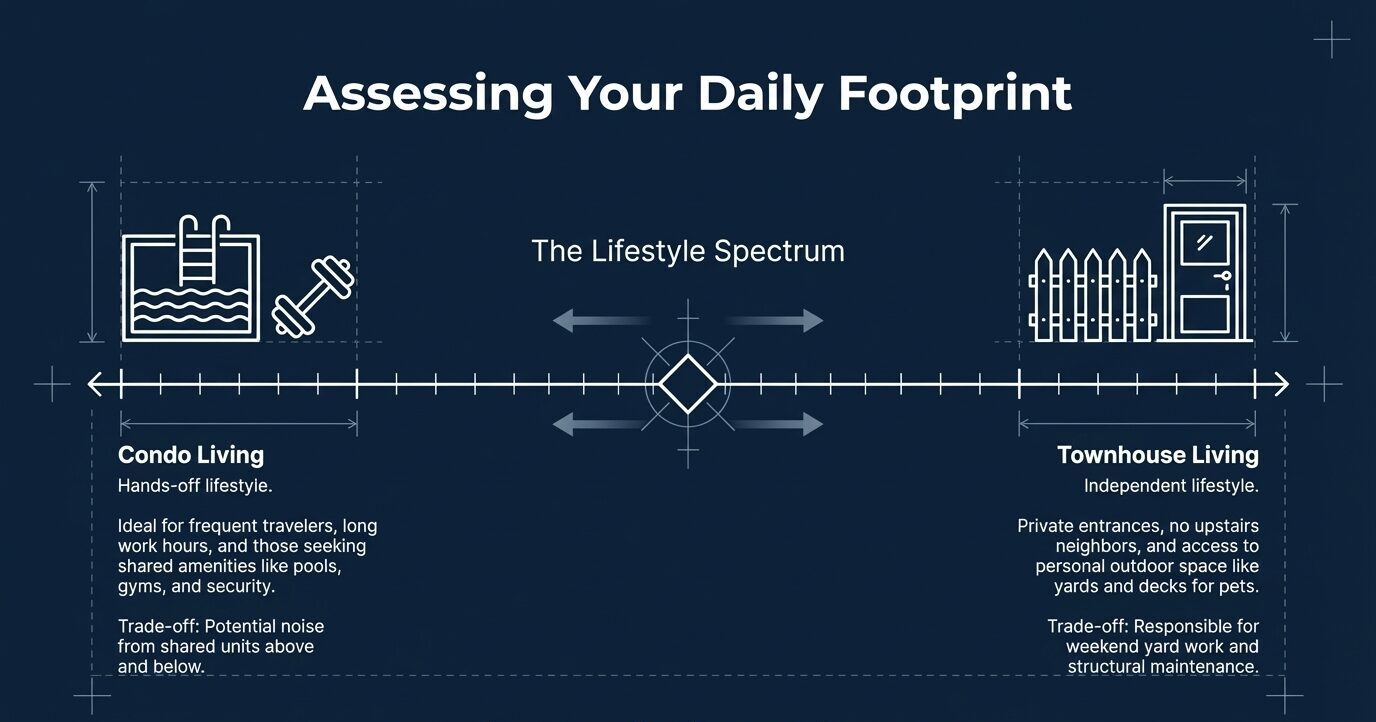
If privacy matters to you, townhouses generally have the advantage. You share a maximum of two walls with neighbors, and you will not have anyone living above or below you. You also get your own entrance and usually some outdoor space. Condos can share walls, floors, and ceilings with other units. Noise can be a real factor, especially in older buildings with less soundproofing. On the flip side, condos often come with amenities like a pool, gym, and security that you would not get with a townhouse. If you are someone who travels frequently, works long hours, or simply does not want to deal with yard work and exterior maintenance, a condo’s hands-off lifestyle is a major advantage. If you want a small yard for your kids or a dog, a townhouse makes more sense.
Resale Value and Investment Potential
Townhouses tend to appreciate more closely to single-family homes because the buyer is purchasing both the structure and the land. Condos can appreciate too, but historically at a slower pace. For real estate investors, both can work depending on the strategy. Condos in urban areas with strong rental demand can generate solid cash flow. Townhouses in suburban markets often attract longer-term tenants, which means less turnover and more stable income. Keep in mind that some condo HOAs restrict or prohibit renting, so always verify the bylaws before buying for investment purposes.
Who Should Buy a Condo vs a Townhouse?
A Condo Might Be Right for You If:
- You are a first-time buyer looking for an affordable entry point into homeownership
- You prefer low-maintenance living and do not want to worry about exterior upkeep
- You value amenities like a pool, gym, or clubhouse
- You are downsizing and want to simplify your life
- You work in or near a downtown area and want walkability
A Townhouse Might Be Right for You If:
- You want more space, multiple levels, and a private entrance
- You want outdoor space like a small yard or patio
- You are a growing family that needs room but is not ready for a single-family home
- You want to build more equity through land ownership
- You prefer lower HOA fees or no HOA at all
The Biggest Mistake Buyers Make
The number one mistake I see buyers make is not understanding the difference between a condo and a townhouse before they start shopping. They assume the two are interchangeable, and then they end up surprised by HOA fees, maintenance responsibilities, or restrictions they did not expect. Take the time to understand what you are buying before you fall in love with a property. Read the HOA documents. Ask about special assessments. Know whether you are purchasing just the interior of a unit or the entire structure and land. These details have a direct impact on your monthly costs, your rights as a homeowner, and your long-term financial picture.
Frequently Asked Questions: Condo vs Townhouse
Can a townhouse be classified as a condo?
Yes. If the development was set up as a condominium association, then even a unit that looks like a townhouse is legally a condo. The ownership structure, not the physical layout, determines the classification. Always review the legal description on the deed.
Are condo HOA fees worth it?
It depends on what the fees cover and how well the association is managed. If the HOA covers extensive amenities, building insurance, and all exterior maintenance, the fees can actually save you money compared to handling everything yourself. The key is to review the HOA’s financial health and reserve fund before buying.
Which is better for a first-time buyer in Michigan When Considering Condo vs Townhouse?
Both can be great options. Condos typically have a lower purchase price and less maintenance responsibility, making them ideal for buyers who are getting used to homeownership. Townhouses offer more space and independence. It comes down to your budget, lifestyle, and what you value most. I recommend sitting down with a local Realtor who knows your market to weigh the options together.
Do condos or townhouses appreciate faster?
Townhouses generally appreciate at a rate closer to single-family homes because the buyer owns the land. Condos can appreciate too, but typically at a slower pace. Location, market conditions, and the quality of the HOA all play a role in either case.
The Bottom Line
Choosing between a condo vs townhouse comes down to what fits your life right now. If you want convenience, lower upfront costs, and shared amenities, a condo is a solid choice. If you want more space, more control, and a property that builds equity more like a traditional home, a townhouse is the way to go. Either way, the best thing you can do is work with an agent who knows your local market inside and out. Metro Detroit has a wide range of condos and townhouses across communities like Farmington Hills, Novi, Northville, West Bloomfield, and beyond, and the right choice looks different for every buyer.
Ready to Find Your Next Home?
Whether you are leaning toward a condo or a townhouse, I can help you find the right fit. I work with first-time buyers, families, downsizers, and investors across Metro Detroit and Southeast Michigan. Call or text me at 248-703-1219 or visit firasrealestate.com
Firas Hanna | Licensed Realtor | MBA | 248-703-1219 | firasrealestate.com
Disclaimer: The content on this website is provided for general informational purposes only and should not be relied upon as legal, financial, real estate, or other professional advice. While we aim to ensure the information is accurate at the time it is written, we make no guarantees regarding its accuracy, completeness, or currency. You should consult a qualified professional before making any real estate or financial decisions.