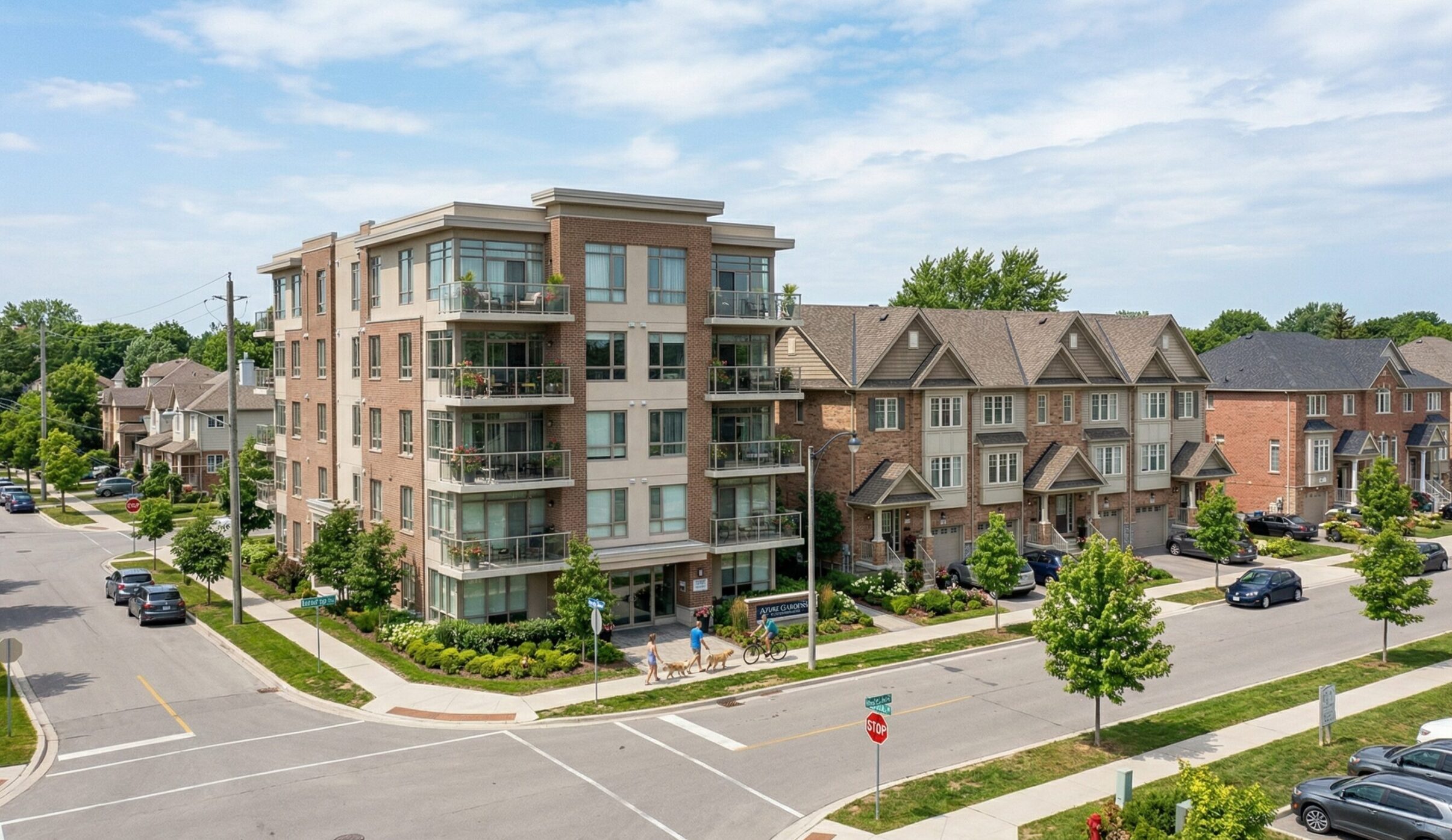

Quick answer: An HOA, or homeowners association, is a private organization that manages a shared residential community such as a subdivision, townhome development, or condo building. Owners pay regular dues that fund shared spaces and services, and they agree to follow the community rules when they purchase the property.
Key takeaways
- Membership is usually mandatory and attaches to the deed, not the person
- The more services the association provides, the more the fee usually costs
- Michigan condos run on a master deed and bylaws, so review them before buying
- Check with the association for open violations, pending assessments, and rental rules before you offer
- Some Michigan associations include perks like private beach or lake access
My name is Firas Hanna, a licensed Realtor with Great Lakes Real Estate Agency LLC. I have spent more than five years helping buyers and sellers across Oakland, Macomb, and Wayne counties, and associations come up on a large share of my deals, from new construction subdivisions in Novi to lake communities in West Bloomfield. The question reaches me in every form: what is an HOA, what is a HOA fee, what does HOA stand for, and are these communities actually worth it. This guide answers all of it, including the one phone call I make on almost every deal that has saved my clients real money.
What Does HOA Stand For?
HOA stands for homeowners association. In practical terms, what is an HOA? It is a legal entity, usually a nonprofit corporation, formed to manage a planned community. Every owner in the community is a member, and membership generally attaches to the deed rather than the person. Sell the home and the membership transfers to the next owner automatically. That is the core of the HOA meaning: shared property, shared costs, shared rules. You will also see it written as homeowner association or simply the association in listings, and it all refers to the same thing.
One thing worth clearing up early: people use HOA as a catchall word, but there are a few different kinds of associations. Single family subdivisions typically have a homeowners association. Condominiums have a condominium association, which in Michigan operates under a master deed and bylaws. Commercial properties can have associations too, which surprises plenty of first time investors. For most of this guide the word HOA covers all of them, and I will point out where condos work differently, because on condo deals the association matters most.
How Does an HOA Work?
When you buy a property in an association community, you automatically agree to its governing documents and its fees. There is no separate signup and, in a mandatory association, no way to opt out while you own the property. The association collects dues from every owner, maintains whatever the community shares, and enforces the rules that every owner accepted at purchase. Two things determine how that plays out in real life: the people running it and the documents behind it.
The Board of Directors
An elected board of volunteer homeowners runs the association. The board sets the annual budget, decides when dues change, enforces the rules, and often hires a property management company for day to day operations. In my experience the quality of that board matters more than almost anything else about the community. I have seen boards that run their neighborhoods like a well managed business, and I have seen boards that treat the role like a personal power trip. Both exist in metro Detroit, which is why I never judge an association by its landscaping alone.
CC&Rs, Bylaws, and the Master Deed
Three documents do most of the work in any association. The covenants, conditions, and restrictions, usually shortened to CC&Rs, spell out what owners can and cannot do with their property. The bylaws explain how the association itself operates, covering elections, meetings, and voting. In a Michigan condominium, the master deed is the foundational document that creates the condo and defines exactly what you own versus what the association controls. If you read nothing else before buying a condo, read the master deed. Later in this post I will share a deal where checking with the association caught a problem the seller was hoping nobody would notice.
What Do HOA Fees Cover?
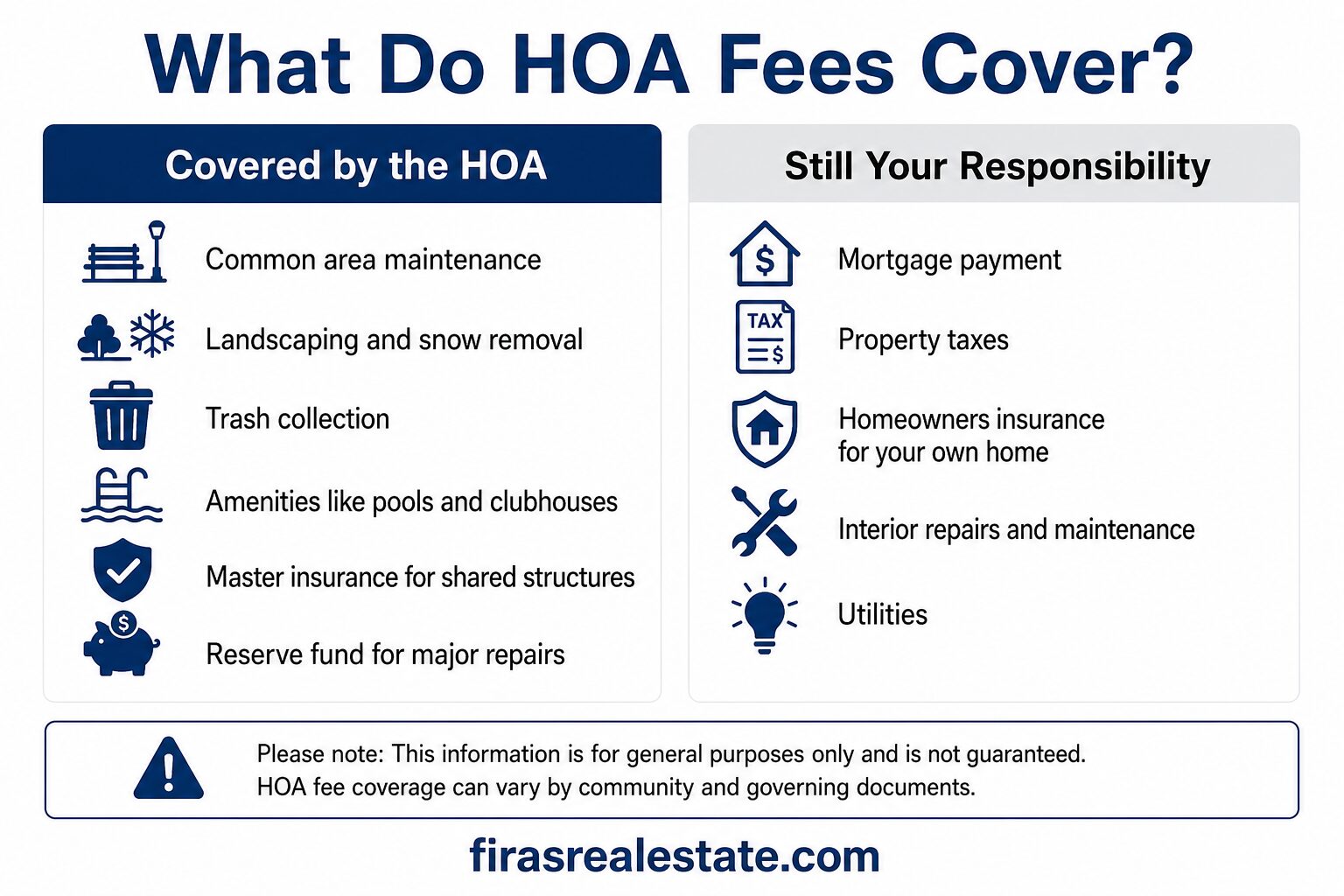
HOA fees pay for the shared costs of running the community. The exact list varies from one association to the next, but dues commonly cover:
- Maintenance of common areas such as entrances, sidewalks, and private roads
- Landscaping in shared spaces, and in many Michigan communities, snow removal
- Trash collection in some communities
- Amenities such as pools, clubhouses, playgrounds, and fitness rooms
- A master insurance policy on shared structures in condo and townhome communities
- Contributions to a reserve fund for large future repairs
What the fee does not cover is just as important. Your mortgage, your property taxes, your own homeowners or condo insurance, and everything inside your own walls generally remain your responsibility.
What Is an HOA Fee and How Much Does It Cost?
An HOA fee is the recurring payment, billed monthly, quarterly, or annually, that funds everything above. There is no single normal number, because the fee reflects the service load. The rule I share with every client is simple: the more services the association provides, the more it usually costs. A subdivision that maintains an entrance sign and a retention pond will generally sit at the low end. A condo community that handles exterior maintenance, master insurance, landscaping, and snow removal will generally sit much higher. In my experience, condo fees usually run higher than subdivision fees for exactly that reason.
One budgeting note buyers sometimes miss: lenders generally count the HOA fee in your debt to income ratio, so a high fee can affect how much home you qualify for.
What Is a Special Assessment?
A special assessment is a one time charge the association levies when its reserves cannot cover a major expense, such as a new roof on a condo building or repaving a private road. Well run associations fund their reserves steadily so assessments stay rare. Before a client of mine buys into an association, I want to know two things: is an assessment pending or being discussed, and how healthy is the reserve fund. A bargain condo with a large assessment around the corner is not a bargain.
Common HOA Rules and Restrictions
HOA rules commonly cover exterior appearance, parking, pets, noise, rentals, and property modifications. Every association writes its own version, but the themes repeat. Expect standards for approved paint colors, fence styles, and lawn upkeep. Expect rules about parking, especially for trailers, boats, and commercial vehicles. Many associations regulate pets, noise, and holiday decorations, and most require board approval before exterior changes like decks, sheds, or additions.
The restriction that catches the most people off guard is the rental rule. Many associations limit how many units can be rented at one time or restrict short term rentals entirely. If you are buying with any thought of renting the property out later, confirm the rental rules in writing before you commit. I have watched this single line item change an investor’s entire plan.
HOAs by Property Type: Condo vs Townhome vs Single Family
How much the association touches your daily life depends heavily on the property type.
| What to expect | Single family sub | Townhome | Condo |
|---|---|---|---|
| Association involvement | Lightest | Middle | Most involved |
| Exterior and roof | Usually you | Varies by community | Usually the association |
| Lawn care and snow | Usually you | Often the association | Usually the association |
| Master insurance | Usually not included | Varies by community | Usually included |
| Typical fee level | Generally lowest | Generally middle | Generally highest |
Single family subdivisions are usually the lightest. The association typically maintains shared spaces and enforces appearance standards, while you handle your own home, lawn, and roof.
Townhomes often sit in the middle. Many townhome associations handle exterior maintenance, lawn care, and snow removal, which is a genuine convenience through a Michigan winter.
Condominiums are the most involved. The condominium association commonly maintains everything outside your unit, carries the master insurance policy, and manages the building or site as a whole. That is why condo dues generally run highest, and why the association’s health matters most on condo deals. If you are weighing the two attached options against each other, my full breakdown of condo vs townhouse ownership covers costs, fees, and what you actually own with each.
Commercial properties can have associations too. Office condos, retail condos, and some business parks operate under associations with their own budgets and restrictions. I have advised investor clients to walk away from commercial deals more than once because the association’s rules or finances did not fit their plan, and they had no idea an association was even part of the picture until we dug in.
Pros and Cons of Living in an HOA
Clients ask me all the time whether HOAs are worth it, and my honest answer after years of working these deals is: some yes, some no. It depends on whether the association is genuinely useful or badly run, and I have seen both sides in this market.
The pros are real. Maintained common areas, amenities you could not affordably own alone, snow and lawn service in many condo and townhome communities, and protection from the neighbor who wants three project cars on the front lawn. A functional association generally helps a community hold its value.
The cons are just as real. The fee is a true monthly cost on top of your mortgage and taxes, the rules limit what you can do with your own property, dues can rise over time, special assessments can appear, and a difficult board can turn small issues into long fights.
The concept of an association is rarely the problem. The specific association, its finances, and its leadership are what you are actually evaluating.
Do You Have to Join an HOA?
If the association is mandatory, yes. Membership runs with the deed, so buying the property is joining the association, and you generally cannot leave while you own it. A smaller number of neighborhoods have voluntary associations, where you can choose whether to pay and participate, though opting out usually means losing access to amenities. The listing, the title work, and the governing documents will tell you which situation you are looking at, and it is one of the first things I confirm for every buyer I represent.
Questions to Ask Before Buying a Home With an HOA
Every deal is different, so I do not run the same rigid script twice. What I do on nearly every association deal, and on every condo deal without exception, is simple: I contact the association directly and check in one way or another. Listings do not always tell the full story. The association usually will.
Here is why that habit matters. On one condo deal where I represented the buyer, the seller had received a notice from the condominium association that a problem on the property had to be corrected before the sale could properly move forward. Instead of disclosing it, the seller tried to keep it quiet. Because I called the association like I always do, the violation surfaced before closing. The seller ended up paying for the fix, my buyer took the unit clean, and we still closed on time. Had nobody made that call, my client would have inherited someone else’s problem on day one.
When you or your agent check in with the association, ask about:
- Any open violations on the specific unit or property, not just the community in general
- Pending or recently discussed special assessments
- The current budget, the reserve fund, and how dues have moved in recent years
- Rental restrictions and caps, especially if you may rent the property out later
- Rules that affect your specific plans, from fences to home businesses
- The benefits that come with membership, because associations are not only restrictions. Some Michigan communities include real perks like a private beach or lake access, and that can add genuine value to the property.
For condos, add one more step that I treat as non negotiable: review the master deed and confirm the unit you are buying is not already breaking any of its provisions before you sign. Buying a unit with an existing violation can mean buying the obligation to fix it.
HOAs in Metro Detroit: What Local Buyers Should Know
I work association deals all over Oakland, Macomb, and Wayne counties, and Oakland County is where I see them most. Newer subdivisions and condo communities in cities like Novi, Farmington Hills, West Bloomfield, Troy, Rochester Hills, Commerce Township, and Lyon Township very commonly come with an association, and most new construction across metro Detroit is built with one from day one. They are also common in Macomb Township and Shelby Township on the Macomb side and in Canton and Northville on the Wayne side.
Two local notes worth knowing. First, Michigan condominiums are governed by the Michigan Condominium Act, which is why the master deed and bylaws carry so much weight here and why condo document review deserves real attention. If the documents raise questions, having a qualified real estate attorney review them before you commit is often money well spent. Second, metro Detroit is lake country. Some associations around Oakland County’s lakes include a private beach, a beach lot, or lake access as part of membership, and for the right buyer that perk alone can justify the dues.
If you are still deciding where in the metro to focus your search, my guide to the suburbs of Detroit breaks down the communities across the region.
Frequently Asked Questions About HOAs
Is $500 a month a lot for an HOA fee?
It depends entirely on what it buys. In a full service condo community where the fee covers exterior maintenance, master insurance, landscaping, and snow removal, that number can be reasonable. In a subdivision that maintains little more than an entrance sign, it would be very high. Compare the fee to the budget and the services, not to a number you saw somewhere else.
Why do some people say never buy a house with an HOA?
Usually because of a bad experience with fees, restrictions, or a difficult board, and those experiences are real. I have seen associations run like a power trip. I have also seen associations that protect owners and keep communities in strong shape. The documents, the finances, and the meeting minutes will generally tell you which kind you are dealing with before you buy.
What happens if you don’t pay HOA fees?
Unpaid dues generally lead to late fees and interest, and the consequences can escalate from there depending on the association’s governing documents. Collection policies vary by community, so read the documents before you buy, and treat the fee like any other required housing cost, because functionally it is one.
Can you leave an HOA after you buy?
Not in a mandatory association. The obligation runs with the property and applies to every owner until the association itself is dissolved, which is rare and difficult. If the rules matter to you, the time to evaluate them is before you make an offer, not after.
Do HOA fees cover property taxes?
No. Property taxes are billed separately by your local taxing authority. Dues fund the association’s budget, and in some condo communities they may include certain utilities, but taxes and your own insurance generally remain separate costs.
Buying in an HOA or Condo Community?
Before you write an offer, make sure the association checks out. I check in with the association on nearly every deal, and it has saved my clients from expensive surprises more than once.
Call 248-703-1219 or reach out here and I will walk through the deal with you.
About the Author
Firas Hanna, MBA is a licensed Realtor with Great Lakes Real Estate Agency LLC who has helped buyers and sellers across metro Detroit for over five years. He works across Oakland, Macomb, Wayne, and the Downriver communities, covering the entire metro rather than a single county, so buyers can compare communities side by side.
Get in touch or call 248-703-1219 to talk through your move.
Disclaimer: The content on this website is provided for general informational purposes only and should not be relied upon as legal, financial, real estate, or other professional advice. While we aim to ensure the information is accurate at the time it is written, we make no guarantees regarding its accuracy, completeness, or currency. You should consult a qualified professional before making any real estate or financial decisions.